Acura GT3
Explore source-backed information and braking guidance for Acura GT3 in iRacing.
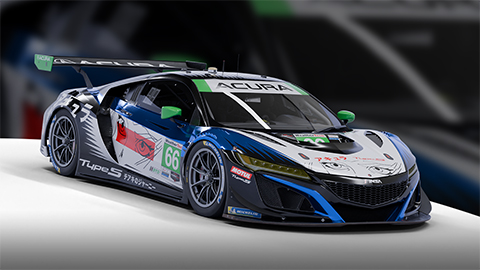
Image © iRacing.com Motorsport Simulations
Quick reference
Chassis
Power
Brakes
Setup
Advanced
How the Acura GT3 Handles Braking
The Acura NSX GT3 Evo features a sophisticated braking system built around adjustable master cylinders for both front and rear axles, allowing precise control over brake bias distribution. The car offers three brake pad compounds—Low, Medium, and High—that trade modulation for raw stopping power, with higher compounds increasing effectiveness but reducing feel. The 12-position ABS system provides remarkable flexibility, with positions 2-7 optimized for dry conditions and 8-12 for wet weather, though higher intervention levels can extend braking distances if set too aggressively for available grip.
Brake bias setup requires careful consideration of the car's aerodynamic platform, as the NSX performs best with relatively low rake. When rear ride height increases during heavy braking—particularly problematic if you're chasing maximum downforce targets—you'll experience both a forward balance shift and overall downforce loss, creating instability. This makes brake bias tuning inseparable from suspension setup, especially when adjusting front camber, which improves mid-corner grip but reduces braking performance and necessitates rearward bias compensation.
Driver technique centers on managing weight transfer through damper tuning. Higher rear low-speed rebound damping can slow the car's pitch rate under braking, increasing stability and mechanical understeer at corner entry. The differential preload also plays a crucial role during the brake-to-throttle transition, with increased preload smoothing the changeover and improving entry stability, though at the cost of sharper on-throttle oversteer.
Stop Guessing, Start Improving
Many drivers slam the brakes with all their strength, but the fastest modulate pressure, use the brake to rotate the car, and exit as fast as possible. Train that skill here.
Train Anywhere, Anytime
Browser-based training works with any racing pedals or controllers. Fanatec, Thrustmaster, Logitech, Simucube — no installation required.
Pro-Designed Exercises
Access exercises created by professional sim racers like Suellio Almeida. Learn the exact braking patterns used by the fastest drivers.
Import Acura GT3 Telemetry
Drop your Garage61 lap CSV and extract braking data for every corner. Generate personalized practice exercises based on YOUR telemetry, not generic patterns.
Track Your Progress
View session history, performance trends, and best scores. Watch yourself improve over time and stay motivated to practice.
And There's Much More
Improve your braking technique with this car and much more:
Create Custom Exercises
Build from templates, draw brake curves, or record with your pedal
Schedule Your Training
Plan practice sessions and track your consistency across weeks
Brake Master Ratings
Earn rankings and compete on leaderboards as you improve
Exercises & Progress Tracking
Practice exercises and track your progress completely free.
No install needed • Works in browser
General practice tips
Tip 1
Starting point
Start with the official setup and consult the simulator documentation for available controls. Appropriate brake bias depends on the car and conditions.
Tip 2
One variable
Change one setting at a time and compare several laps. Record the change and observed behavior before keeping it.
Tip 3
Comparable conditions
Compare similar fuel loads, tires and track conditions. One lap alone does not establish that a setting is better.
Frequently asked questions
General guidance for practicing and consulting car-specific sources.
Where can I find settings for the Acura GT3?
Where can I find settings for the Acura GT3?
How should I compare a setup change?
How should I compare a setup change?
How can I practice pedal control?
How can I practice pedal control?
Explore MoreGT3 Cars
Similar cars you might be interested in learning
Ready to Master the Acura GT3?
Put this knowledge into practice with Braking Lab's interactive brake training exercises. Import your telemetry and get personalized feedback.