UM Dallara P217 LMP2
Explore source-backed information and braking guidance for UM Dallara P217 LMP2 in iRacing.
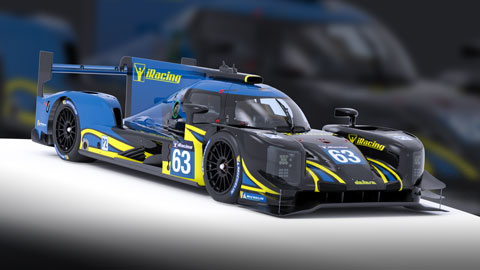
Image © iRacing.com Motorsport Simulations
Quick reference
Chassis
Power
Brakes
Setup
Advanced
How the UM Dallara P217 LMP2 Handles Braking
The Dallara P217 LMP2 features a sophisticated braking system with adjustable master cylinders and three brake pad compounds. The front and rear master cylinder sizes directly alter line pressure distribution, allowing precise brake bias tuning beyond the standard bias adjustment. Pad compounds range from Low friction (less friction and more modulation) to High friction (more friction and less modulation). The dashboard displays real-time brake line pressure, rotor temperatures, and features individual wheel lockup warning lights—critical feedback for optimizing bias and pad selection.
The aerodynamic platform is sensitive to ride-height changes: excessive rear ride height can shift the aerodynamic balance forward and reduce total downforce. The manual treats ride height and brake pressure bias as separate adjustments; use the documented controls to evaluate the platform and braking balance without assuming that a rearward bias change will correct an aerodynamic problem.
Adjust brake bias incrementally and observe the wheel-lock warnings and braking balance. Higher negative camber values increase cornering grip but reduce longitudinal braking grip, requiring bias adjustments to compensate. The differential preload also affects corner entry stability under braking—higher preload increases understeer during deceleration, which may allow more aggressive initial brake application without instability.
Stop Guessing, Start Improving
Many drivers slam the brakes with all their strength, but the fastest modulate pressure, use the brake to rotate the car, and exit as fast as possible. Train that skill here.
Train Anywhere, Anytime
Browser-based training works with any racing pedals or controllers. Fanatec, Thrustmaster, Logitech, Simucube — no installation required.
Pro-Designed Exercises
Access exercises created by professional sim racers like Suellio Almeida. Learn the exact braking patterns used by the fastest drivers.
Import UM Dallara P217 LMP2 Telemetry
Drop your Garage61 lap CSV and extract braking data for every corner. Generate personalized practice exercises based on YOUR telemetry, not generic patterns.
Track Your Progress
View session history, performance trends, and best scores. Watch yourself improve over time and stay motivated to practice.
And There's Much More
Improve your braking technique with this car and much more:
Create Custom Exercises
Build from templates, draw brake curves, or record with your pedal
Schedule Your Training
Plan practice sessions and track your consistency across weeks
Brake Master Ratings
Earn rankings and compete on leaderboards as you improve
Exercises & Progress Tracking
Practice exercises and track your progress completely free.
No install needed • Works in browser
General practice tips
Tip 1
Starting point
Start with the official setup and consult the simulator documentation for available controls. Appropriate brake bias depends on the car and conditions.
Tip 2
One variable
Change one setting at a time and compare several laps. Record the change and observed behavior before keeping it.
Tip 3
Comparable conditions
Compare similar fuel loads, tires and track conditions. One lap alone does not establish that a setting is better.
Frequently asked questions
General guidance for practicing and consulting car-specific sources.
Where can I find settings for the UM Dallara P217 LMP2?
Where can I find settings for the UM Dallara P217 LMP2?
How should I compare a setup change?
How should I compare a setup change?
How can I practice pedal control?
How can I practice pedal control?
ExploreAll iRacing Cars
Explore detailed guides for every iRacing car. Technical specs, setup insights, and performance details across all categories—from GT4 to Prototype, Formula to Stock Car.
Ready to Master the UM Dallara P217 LMP2?
Put this knowledge into practice with Braking Lab's interactive brake training exercises. Import your telemetry and get personalized feedback.